
Pyramid Solitaire - Card Games
MobilityWareCard
4.614.42K Reviews
- Version
- 6.1.0.5136
- Installs
- 5.00M
- Age Rating
- Everyone
Screenshots
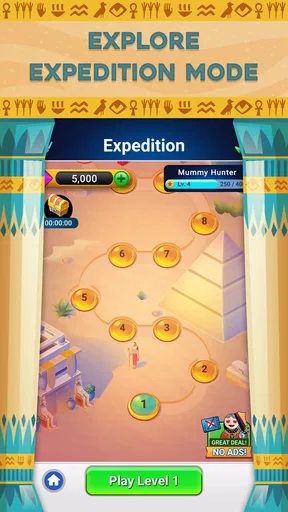
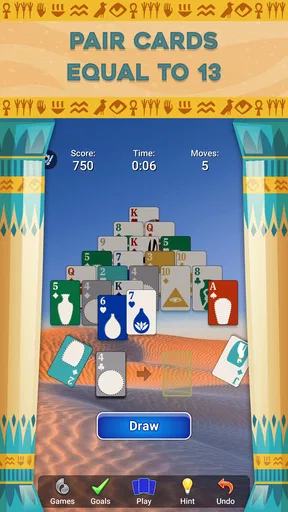
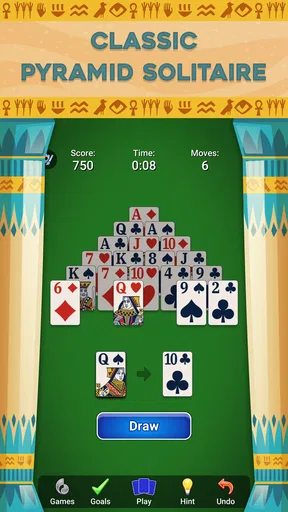
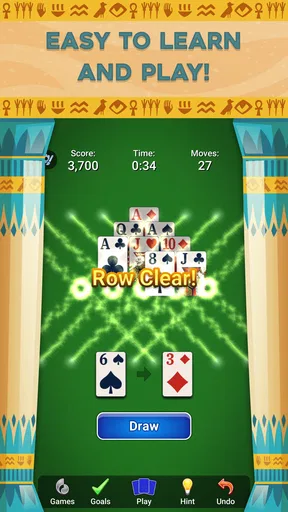
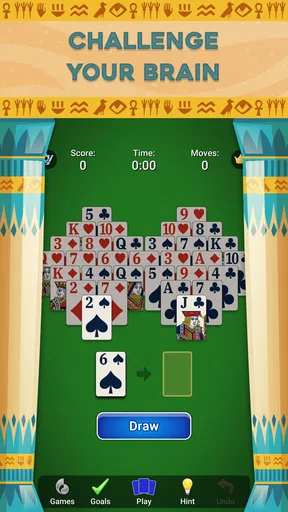

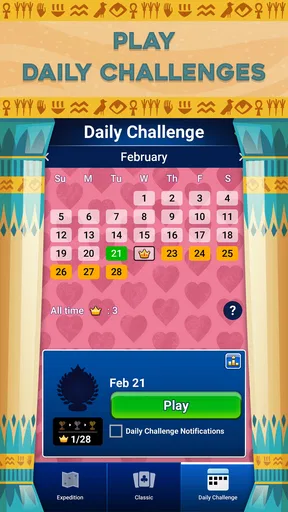

Our Review of Pyramid Solitaire - Card Games
 Analysis by Appyee
I usually judge a solitaire game by what happens after the first few sessions. Almost any familiar card game can feel pleasant on day one, but the real question is whether it still deserves a place on your phone when the novelty has gone. Pyramid Solitaire - Card Games, developed by MobilityWare, makes a strong first impression because it turns a classic layout into a quick, readable routine. It is free to play, aimed at Everyone, and available for Android devices running Android 8.0 or later.
After spending time with it, I see this as a game for short mental breaks rather than a deep card-gaming hobby. The basic appeal is easy to understand: clear the pyramid by pairing cards whose values add up to thirteen, while working through the available cards and trying not to waste useful moves. That familiar rule set gives the game an immediate rhythm. You can begin without a tutorial-heavy learning curve, yet there is enough planning to stop each round from becoming completely automatic.
Why the first week feels so satisfying
The opening sessions are especially effective because each deal creates a small problem that can be solved in a few minutes. I like that the board gives me a visible target from the beginning. Instead of wondering what I am supposed to do, I am looking for pairs, uncovering blocked cards, and deciding whether a tempting move is actually the best one. Queens can be removed on their own, while other cards need a matching value, so the rules stay simple without making every decision meaningless.
The presentation also helps. Card games live or die by readability, and the layout is much easier to enjoy when I can identify exposed cards quickly. That matters when playing one-handed on a phone during a coffee break or while waiting for an appointment. I do not need to remember a complicated control scheme. Tapping the cards I want to combine keeps the focus on the puzzle rather than on the interface.
One useful habit is to avoid clearing the first available pair immediately. I often scan the pyramid for cards that are blocking several others, then compare that opportunity with the cards available in the draw area. A pair that looks convenient may remove a card I needed to expose a more valuable section. This is one of the game’s better qualities: the rules are approachable, but careful sequencing can still improve a round.
During the first week, the game works well as a low-pressure alternative to more demanding mobile entertainment. I can play a round while listening to a podcast, take a break from a long article, or use it to settle down before bed. It does not ask me to learn a fictional world, manage a large collection, or keep track of a long campaign. That simplicity is the reason it feels relaxing rather than like another task on my list.
The store summary describes it as a way to train the brain, have fun, and relax, and I think the “relax” part is the most convincing. I would not treat a solitaire session as serious cognitive training, but it does encourage attention, short-term planning, and pattern recognition. The benefit comes from concentrating on a small problem for a while, not from any promise that the game will transform your memory or reasoning.
Its popularity is easy to understand. The game has passed five million installs and holds a 4.6 average from roughly 133,000 ratings, which suggests that many players find the formula dependable. Those figures do not guarantee that every deal or design choice will suit me, but they fit my experience of a polished, accessible card game that is easy to revisit.
The right way to approach a difficult deal
A mistake I made at first was treating every round as a race to remove cards as quickly as possible. Pyramid layouts reward a slower scan. Before tapping, I check whether a card is covering two others, whether the draw pile may reveal a needed partner, and whether I am about to leave an unusable card stranded. This simple three-step check makes the game more interesting and reduces the feeling that a failed round was decided entirely by luck.
Another practical tip is to use the undo option, when available in the current play flow, as a learning tool rather than as a way to erase every consequence. Replaying the last decision can show why a move failed, especially when I accidentally expose the wrong card or spend a useful match too soon. I would not rely on undo to make every deal effortless, but it is valuable for learning the shape of the puzzle and improving future choices.
That distinction matters because Pyramid Solitaire is not a pure strategy game. The cards you receive still influence the outcome, and some rounds feel more generous than others. I enjoy the balance when my choices matter without making the game exhausting. Players looking for complete control, competitive precision, or a guaranteed solvable puzzle may prefer a more specialized solitaire title with stronger deal-selection tools.
What remains useful after the novelty fades
After the first month, the question becomes whether the game has enough recurring value to justify keeping it installed. For me, the answer depends on how I use it. If I want a dependable five-minute activity, it continues to work. The rules remain familiar, rounds are compact, and I can return without remembering a storyline or rebuilding a strategy from scratch. That makes it more durable than many casual games built around a single novelty mechanic.
The strongest long-term use case is routine. I can play a round during a commute, after finishing a household chore, or between larger tasks when I want a clear stopping point. Because a round has a natural beginning and end, it is easier to put down than an endless feed. The game can become a small ritual: one or two boards with a drink, then back to the day.
It is also a good fit for players who enjoy traditional card games but do not want to sit down with a physical deck. A real deck offers more tactile satisfaction, while this version gives me automatic card handling and a compact screen layout. Compared with Klondike Solitaire, Pyramid feels more focused on pairing and clearing a visible structure. Compared with FreeCell, it asks for less long-range control and offers a more casual puzzle. Compared with competitive card games, it removes opponents, pressure, and waiting.
That comparison reveals the trade-off. If I want social interaction, this is not the right choice. If I want a campaign with new systems, character progression, or a strong sense of discovery, the familiar rules may feel too narrow. If I want a purely offline physical-card substitute with no distractions, a basic solitaire app may be a better fit. This title earns its space through presentation and convenience, not through reinventing the genre.
The game’s free entry also helps its long-term case. I can try it without paying upfront, while optional in-app purchases range from $1.99 to $29.99 per item. That pricing makes it important to decide what kind of player I am before spending anything. For occasional users, the free experience is the logical starting point. Someone who plays daily may consider a purchase more reasonable, but I would first make sure the extra value addresses an actual annoyance rather than simply extending a habit I already enjoy.
I also appreciate that the age rating is Everyone. That makes it an easy recommendation for households looking for a straightforward card game without mature themes. Still, an Everyone rating does not automatically make it ideal for every family member. Younger players may need help understanding the thirteen rule and the value of planning ahead, while older players may care more about card size, contrast, and comfortable touch controls than about extra presentation.
How I keep it from becoming repetitive
My best way to extend the game’s life is to change the goal of each session. Sometimes I focus on clearing the pyramid efficiently. Other times I concentrate on avoiding unnecessary draws or on identifying the move that opens the most covered cards. These self-imposed goals give familiar rounds a little more purpose without pretending that the game has a large strategic campaign.
I also recommend keeping sessions short. Playing until every deal feels identical is the quickest way to turn a relaxing game into background noise. A brief session preserves the pleasant concentration that brought me back in the first place. This is a small but important maintenance habit: the game works better as a regular pause than as an all-evening commitment.
Players who enjoy tracking personal improvement may find value in remembering common mistakes. I repeatedly lost momentum by using a matching card too early, especially when another exposed card could have opened a larger section of the pyramid. Once I noticed that pattern, I began checking the blocked cards before making easy pairs. That kind of self-correction is where the lasting value comes from, because the app itself does not need to become more complicated for my decisions to improve.
Maintenance, friction, and the reasons fatigue can appear
A casual card game has a low maintenance burden compared with a large multiplayer title. There is no long build to manage, no team schedule to follow, and no elaborate collection that demands daily attention. The current version is 6.1.0.5136, and the app supports Android 8.0 or later, so it is accessible on a broad range of devices that are not running the newest software.
That accessibility is useful, but it also highlights one limitation: the experience is still tied to the habits of a mobile game. Free games commonly need ways to support themselves, and optional purchases can affect how comfortable a player feels during longer sessions. I would approach it with a clear rule: enjoy the core card play first, and only consider spending if the purchase improves a specific part of the experience I use regularly.
The main source of fatigue is repetition. Pyramid Solitaire has a narrow central action: find valid pairs, expose cards, and manage the available sequence. That loop is pleasant because it is focused, but it cannot offer the variety of a larger strategy game. After several consecutive rounds, I sometimes stop thinking about the layout and begin tapping by habit. When that happens, taking a break is better than forcing the game to provide excitement it was never designed to deliver.
Luck can create another kind of frustration. A careful player can still face an awkward arrangement, and a poor draw can make a promising board feel out of reach. I see this as part of the genre rather than a flaw unique to this app, but it affects long-term appeal. Players who dislike uncertain outcomes may prefer a game that gives more control over deal selection or a puzzle app where every solution is designed and repeatable.
There is also a difference between relaxing concentration and mental effort. Some evenings I want a quiet activity that keeps my hands busy, and this game is a good match. On other days, I want a stronger challenge that rewards planning across many turns. In those moments, a deeper card game or a difficult logic puzzle gives me more satisfaction. Knowing which mood I am in prevents me from judging the app unfairly.
For a realistic everyday scenario, imagine finishing work with ten minutes before dinner. I can open the game, play one board, and stop when the round ends. There is no need to remember a plot, coordinate with another player, or commit to a long match. That convenience is the app’s most durable advantage. On a long flight or a quiet weekend, however, I would probably alternate it with other games because the same pairing loop eventually loses its freshness.
Who should install it, and who should skip it
I would recommend it to someone who wants classic solitaire with a pyramid layout, readable card play, and sessions that fit into spare moments. It is particularly suitable for players who enjoy light planning but do not want a steep learning curve. It also works for people returning to card games after a long break, since the core rule is easy to grasp and the board communicates the objective clearly.
I would be more cautious recommending it to players who need constant novelty. If you want an evolving adventure, a strong multiplayer community, or a game built around collecting and customization, this will probably feel limited. The same is true if you dislike optional purchases in free games or prefer a completely distraction-free digital deck. In those cases, a paid minimalist solitaire app or a more strategic card title may better match your expectations.
MobilityWare’s experience with casual card games shows in the approachable design, but familiarity is both a strength and a boundary. The app does not need to teach me an elaborate system, yet it also cannot hide the fact that I am revisiting a classic format. I judge it positively because it handles that format comfortably and makes it easy to return for a short session, not because it offers a revolutionary interpretation.
My long-term verdict
My final view is that Pyramid Solitaire - Card Games earns lasting space for the right kind of player, but not because it becomes more ambitious over time. It lasts because it is dependable. When I want a quiet card puzzle with a clear finish line, it gives me that experience quickly. Its free entry, Everyone rating, broad Android compatibility, and strong reception make it an easy title to try.
The lasting value comes from habit and restraint. I get the most from it when I play a few rounds, pay attention to sequencing, and stop before repetition turns into fatigue. The useful question is not whether it can entertain me indefinitely; almost no single solitaire layout can. The better question is whether it can reliably fill small gaps in my day without demanding too much attention, and here the answer is yes.
I would keep it installed as a calm fallback rather than as my main mobile game. It is a good companion for waiting rooms, short breaks, and evenings when I want something familiar. I would skip it if I were searching for a deep strategic system or a social card experience. For everyone else, its real strength is simple, repeatable focus: a compact pyramid, a handful of decisions, and a satisfying reason to put the phone down when the round is finished.
Verdict
Strengths of Pyramid Solitaire - Card Games
- Simple rules make it easy for beginners to start playing.
- Short rounds are convenient for quick breaks or casual sessions.
- Multiple layouts provide variety beyond the standard pyramid deal.
- Offline play is useful when traveling or without a stable connection.
- Card animations and tap controls make moves feel smooth and intuitive.
Limitations of Pyramid Solitaire - Card Games
- Some deals may feel luck-based rather than dependent on skill.
- Ads can interrupt play, especially in the free version.
- Limited strategic depth may not satisfy experienced solitaire players.
- Progression or rewards can become repetitive after extended sessions.
- Small cards may be difficult to read on compact phone screens.
Other Releases by MobilityWare
View All

Similar Picks in This Category
View All
Solitaire - Classic Card Games
MobilityWare4.6

UNO!™
Mattel163 Limited4.3

Spider Solitaire: Card Games
MobilityWare4.6

Solitaire.com - Classic Cards
Tripledot Studios Limited4.7

Plants vs. Zombies™ Heroes
ELECTRONIC ARTS4.1

Hearthstone
Blizzard Entertainment, Inc.4.1
Frequently Asked Questions
How do you play Pyramid Solitaire - Card Games?
Pyramid Solitaire is played by removing pairs of uncovered cards that add up to 13. Kings can usually be removed on their own, while a Queen and Ace, or a Jack and Two, form valid pairs. You work through the pyramid and draw pile strategically, exposing hidden cards and clearing the layout before the available cards run out.
Is Pyramid Solitaire - Card Games free to download and play?
The game can generally be downloaded and played for free, although the exact business model may vary depending on the Android or iOS version. Free editions may include advertisements, optional hints, extra deals, or other in-app purchases. Before installing, check the store listing for current pricing, subscription details, and whether any features require payment.
Can I play Pyramid Solitaire without an internet connection?
Many versions of Pyramid Solitaire support offline play, making them suitable for travel, commutes, or situations without a reliable connection. Basic card games usually remain playable after installation, but advertisements, cloud synchronization, daily challenges, leaderboards, or special events may require internet access. Offline availability can differ between versions and devices.
Does Pyramid Solitaire - Card Games include hints, undo moves, or different difficulty levels?
Most modern Pyramid Solitaire apps include helpful features such as undo buttons, hints, automatic card matching, statistics, and multiple deal variations. These tools make the game more accessible to beginners, while limited moves or harder layouts provide a challenge for experienced players. Some assistance features may be restricted or connected to advertisements or in-app purchases.
Is Pyramid Solitaire - Card Games suitable for beginners and casual players?
Yes. Pyramid Solitaire is easy to understand because its main rule is based on matching cards that total thirteen, but winning still requires planning and careful use of the draw pile. The relaxed pace makes it suitable for casual sessions, while scoring, timed rounds, daily puzzles, and increasingly difficult layouts can offer enough variety for regular players.
Play our best games!


